1. Arrival in Bielefeld: A City Whispering with Stories
Stepping off the train at Bielefeld Hauptbahnhof, the first sensation is that of stillness—an understated calm that hangs over the city like early morning mist. Unlike the clamor of Berlin or the bustling modernity of Frankfurt, Bielefeld greets its visitors with quiet dignity. Tucked into the heart of the Teutoburg Forest, this city balances its industrial character with layers of preserved heritage. What it lacks in flamboyance, it compensates for in sincerity.
The streets are clean, lined with trees just beginning to embrace the golden hues of the approaching winter. Trams pass steadily, their motion rhythmic and dependable, as if in tune with the town’s carefully measured pace. Locals move with a certain deliberateness, unhurried but purposeful. There’s a politeness to the atmosphere, a sense that time here hasn’t been bullied into submission by modern frenzy.
With my small suitcase rolling behind me and my camera slung over my shoulder, I made my way to the old town, Altstadt, where the past is always within arm’s reach. It was here, at the foot of a gently sloping hill, that I first caught sight of Sparrenburg Castle.
2. The First Glimpse of Sparrenburg: Perched Like a Watchful Sentinel
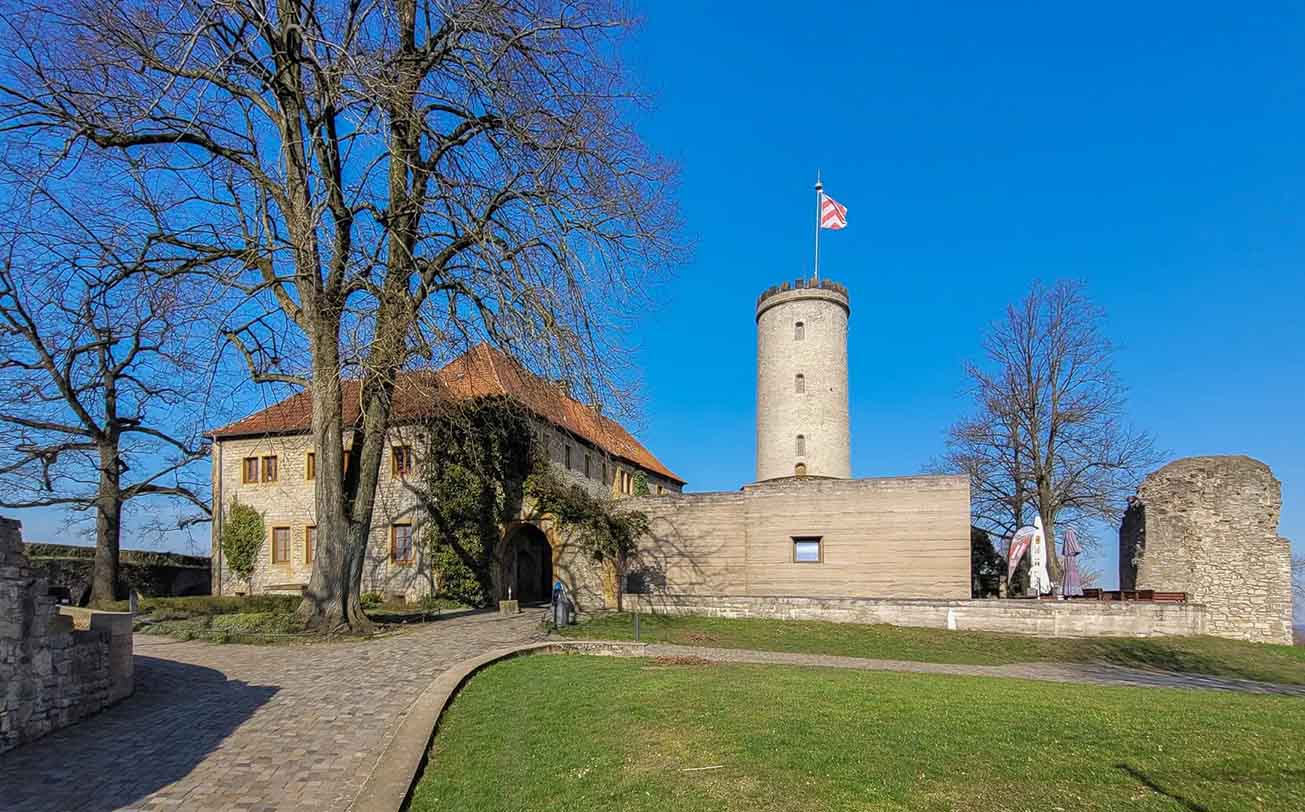
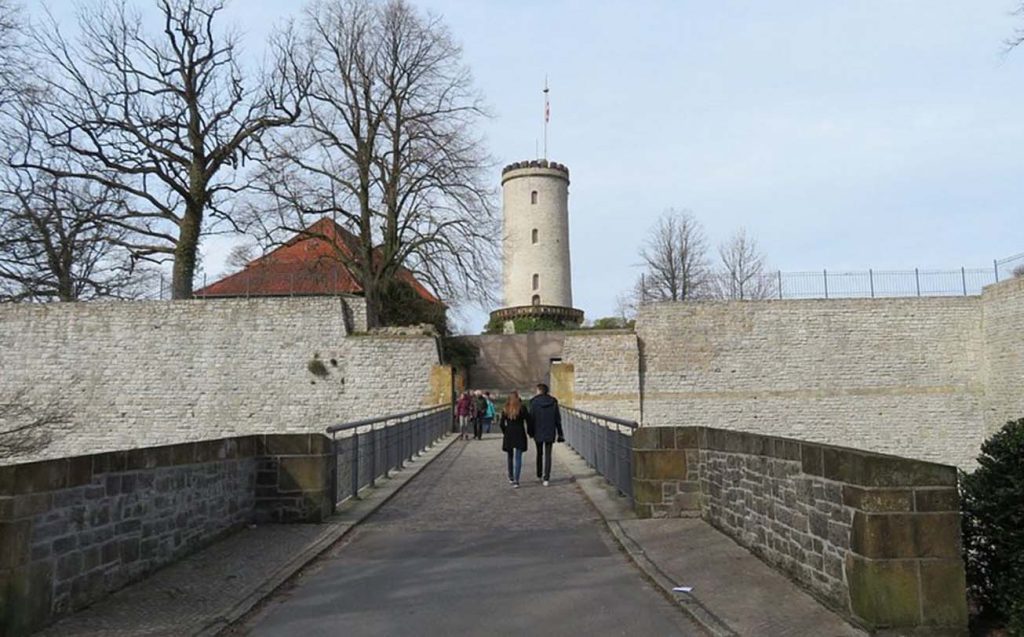
From the cobblestone streets of the Altstadt, Sparrenburg rises like a half-remembered dream. Perched atop the Sparrenberg hill, its stone tower pierces the sky, flanked by weather-worn ramparts and remnants of ancient battlements. It looks both formidable and exhausted—proud, yet marked by centuries of wind, war, and weather. The kind of structure that doesn’t simply exist but endures.
The climb up to the castle is steep but manageable, with a winding path that offers generous views of the surrounding forest. The further I ascend, the more the city seems to retreat, replaced by birdsong and the rustle of branches. By the time I reach the top, it feels as though I’ve crossed some invisible boundary between the present and a past still very much alive.
3. A Fortress Forged in Conflict
Sparrenburg Castle was originally built around the year 1250 by the counts of Ravensberg. That’s not just a date on a plaque; it’s a portal into a different world—one in which territorial borders were fluid, power was projected through fortifications, and stone was the language of sovereignty.
The strategic location on the Sparrenberg hill was no accident. From this vantage point, one can see for miles in every direction, particularly toward the Teutoburg Forest, which once served as a natural barrier and a place of historical reckoning. It’s no wonder the castle played a central role during the Thirty Years’ War, its thick walls sheltering soldiers and civilians alike during one of Europe’s darkest chapters.
Walking along the restored sections of the outer wall, I placed a hand on the cool limestone blocks. They’re irregular in shape, not the uniform bricks of modern construction. Each stone is like a page in a chronicle written in the language of resilience. There’s something humbling about that—a quiet reminder that permanence is earned, not given.
4. Exploring the Tower: Between Heaven and Earth
One of the most iconic features of Sparrenburg is its tower, which rises over 37 meters above the hill. A narrow spiral staircase leads to the top—about 120 steps carved into the thick masonry. It’s not a climb for the claustrophobic. The air grows thinner, more confined with every step, and the only light filters in from occasional slits in the stone. But perseverance rewards you with a breathtaking view.
At the top, the wind greets you like an old friend—sharp, unfiltered, and carrying the scent of pine from the forest below. The entire city of Bielefeld unfurls at your feet, its blend of modern buildings and traditional timber-framed houses forming a tapestry of past and present. To the west, factory chimneys punctuate the skyline; to the east, the rolling hills seem to stretch into eternity.
A group of schoolchildren arrived as I was admiring the panorama. Their voices echoed in the crisp air, their laughter weaving through the history like a playful thread. One boy pointed out into the distance and confidently declared he could see all the way to Dortmund. A teacher gently corrected him, but the child’s imagination remained undeterred. And why not? From a place like this, the whole world seems within reach.
5. Beneath the Castle: Into the Vaults of Time
Few visitors suspect that what lies beneath Sparrenburg is just as compelling as what stands above. The underground passages—once used for defense, storage, and escape—form a labyrinthine network of stone corridors and arched ceilings. Descending into them is like entering the bloodstream of the fortress.
The guide spoke in deliberate German, punctuated with dry wit and the occasional historical anecdote. She described how soldiers once crouched in these tunnels, listening for the footsteps of invaders or preparing to repel attackers from within. The air is noticeably cooler here, heavy with dampness and old dust. One corridor leads to a well that has never dried up; another to a narrow shaft used for smuggling messages during times of siege.
Here, the silence is different. It presses in, not with menace, but with solemnity. Time itself seems to slow in these passages, as though unwilling to disturb the ghosts of memory.
6. In the Courtyard: History Meets the Present
The central courtyard of Sparrenburg is open, ringed by towers and walls bearing the patina of centuries. In the summer, it plays host to the Sparrenburgfest—a medieval-themed festival with costumed performers, blacksmiths, musicians, and vendors peddling everything from mead to handmade leather boots. Though the festival had ended weeks before my visit, traces of it remained: colorful banners still fluttered from some windows, and a wooden stage had not yet been dismantled.
I sat on a bench near the base of the main tower, watching a couple sketch the fortress in silence. Their drawing was meticulous, their attention reverent. Nearby, a local woman walked her terrier, pausing occasionally to let the dog sniff at the ancient stonework. The juxtaposition of everyday life with monumental history was oddly comforting.
7. A Brief Walk into the Past: The Ravensberger Land
Though the castle is the centerpiece, Bielefeld’s historical tapestry stretches well beyond its walls. Not far from Sparrenburg lies the Ravensberger Spinnerei, a former textile mill turned cultural center. Once the economic heart of the region, it now houses art exhibitions, music events, and archives chronicling the industrial evolution of the area.
Wandering through its halls, I found myself marveling at old looms and photographs of workers from a bygone era. There was dignity in those sepia-toned faces—resilient, weathered, yet hopeful. The transformation of the mill from an industrial engine to a cultural haven echoes a broader theme in Bielefeld: preservation not as a resistance to change, but as an embrace of continuity.
8. Reflections by Dusk: Shadows and Stone
As evening approached, I returned to Sparrenburg one last time. The light had shifted, casting long shadows across the courtyard. The tower stood silhouetted against a sky streaked with crimson and violet, like a painting deliberately left unfinished. Bats flitted silently across the battlements, their wings barely disturbing the air.
There’s a moment that lingers from that evening—a moment of complete stillness as I stood alone on the wall walk, the city lights flickering to life below. The wind carried the faint tolling of church bells, each chime rippling through the night like a whisper from another age. The weight of history didn’t feel burdensome; it felt grounding.
The stories embedded in those stones aren’t relics—they’re living echoes. Every brick laid, every tunnel carved, every tower raised was an act of purpose, of defiance against impermanence. To visit Sparrenburg is not merely to observe history but to inhabit it briefly, to feel its pulse beneath your feet and its breath in the wind.
And long after the castle disappears from view, its presence remains—in memory, in photographs, in the subtle change of rhythm it leaves upon the soul.